
This is not legal advice and we are not FLHSMV or any state agency. Rules and fees change. Confirm anything that affects you on the FLHSMV site before you go.
The path
Florida’s first step for a new driver is the learner’s license. You must be at least 15. The Class E driver license comes after that.
- Finish the course Florida asks of a new driver.
- Gather papers that prove who you are, your Social Security number, and where you live.
- If you are under 18, get the Parental Consent Form signed.
- Pass the vision and hearing test at a service center.
- Pass the Class E Knowledge Exam.
- Practice driving on the learner’s license with a licensed driver who is 21 or older.
- Pass the Class E Driving Skills Test.
The steps come from the FLHSMV page on licensing for teens. A first Class E license costs $48.00, and that price covers the learner’s license. A tax collector office may add a $6.25 service fee. Both amounts are on the FLHSMV fee list.
What to bring
- Who you are — one primary identification paper. For a U.S. citizen, a certified U.S. birth certificate or a valid U.S. passport works.
- Your Social Security number — a paper that shows it, such as your Social Security card.
- Where you live — two papers that show your Florida home address.
- Your name, if it changed — the marriage certificate, divorce decree or court order that links the old name to the new one.
Bring originals or certified copies. Photocopies are turned away, and so are notarized copies. The accepted papers are listed in the Official Florida Driver License Handbook.
The list changes with your status: U.S. citizen, immigrant, non-immigrant or Canadian. Pick yours on the FLHSMV What to Bring page. That page says a first driver license means a visit to an office with your papers.
A new Florida card has a star in the upper right corner. The star shows the card meets the federal REAL ID rules. Florida also changed the look of the card in 2026. FLHSMV says the new design does not make you replace a card you already hold (Florida’s new driver license).
The learner’s license
- Be 15 or older.
- Finish the course. See below for which one.
- Pass a test of your vision and hearing. It is given at a service center.
- Pass the Class E Knowledge Exam.
- Show your proof of identity, Social Security number and home address.
Full list: FLHSMV licensing requirements for teens.
The course
- If you are under 18, you finish a Driver Education Traffic Safety (DETS) course before you apply for a learner's license.
- If you are 18 or older and no state or country ever gave you a driver license, you finish a Traffic Law and Substance Abuse Education (TLSAE) course before you apply.
The 2023 handbook names only TLSAE. The law changed on July 1, 2025. FLHSMV describes its courses on Education & Courses.
If you are under 18
- Bring a Parental Consent Form that is signed and notarized.
- The handbook also lets a parent or legal guardian sign in front of the driver license agent.
- A step-parent may sign only after legally adopting you.
- A licensed driver who is 21 or older rides with you every time you drive.
- The handbook puts that driver in the closest seat to your right.
- For the first three months, you drive in daylight hours only.
- After three months, you may drive until 10 p.m.
These limits are on the same FLHSMV teen page, which covers new drivers ages 15 through 17.
The Class E Knowledge Exam
You answer 50 multiple-choice questions. You pass with 40 right, which is 80 percent. The questions cover Florida traffic laws, safe driving, and traffic signs and signals.
The exam is given in English only (Class E Knowledge Exam page). FLHSMV says to study the Official Florida Driver License Handbook to get ready.
Where you can take it
- In person — at a service center.
- Online, if you are under 18 — through a company FLHSMV has approved. You need a Parent Proctoring Form. It must be notarized or signed in front of a driver license examiner.
- At school — many high school driver education classes may give the exam through a program called DELAP. Ask your high school whether it takes part.
Pass with an approved company, and your result goes to FLHSMV on its own. You may still be picked at random for a retest at an office, with no warning and no fee. Fail that retest, and a fee is charged at your next try. All of this is on the same FLHSMV exam page.
A knowledge retest is $10.00 on the FLHSMV fee list.
On this site, a practice test like the real one is 50 questions with 10 misses allowed.
Practice that test here, free. A right answer passes without comment. A miss is explained where it happens, because that is the moment it teaches.
Moving to Florida with a license
This part is for people who already drive. If you hold a valid license from another U.S. state, Florida may not make you take its exams again.
- You have 30 days. Once you become a Florida resident, you must get a Florida driver license within 30 days to drive on Florida roads (New Resident).
- What makes you a resident. FLHSMV may count you as one once you start work here or enroll your children in public school. Registering to vote or filing for a homestead tax exemption counts too. So does living here more than six months in a row. Same FLHSMV page.
- Your car has a shorter deadline: 10 days. Its title and registration are due within 10 days of becoming a resident. First you need insurance from an agent licensed to sell it in Florida. Same FLHSMV page.
- You apply in person at a local office that offers driver license services. Same FLHSMV page.
- There is a vision test. The New Resident page says you will be given one. The handbook says it is still required when the other exams are waived.
- The two exams can be waived. The handbook waives the Class E Knowledge Exam and the driving test for a valid license from a U.S. state or territory. The New Resident page says only that you may be eligible, so do not treat it as certain.
- You hand in your old license. The handbook says a license from another state or U.S. territory is surrendered when Florida issues yours.
- The fee is the same. A first Florida Class E license is $48.00. Most tax collector offices add a $6.25 service fee (New Resident).
The handbook’s waiver list also names the U.S. military, Canada, France, Taiwan and South Korea. For Germany, only the driving test is waived. A Canadian license must be handed in to get the waiver.
You bring the same kinds of papers as any first-time applicant. The New Resident page links to the list for your status.
From learner’s license to driver license
- Be 16 or older.
- Hold the learner’s license for at least 12 months, or turn 18, whichever comes first.
- Get 50 hours of driving experience. At least 10 of those hours must be at night.
- A parent, legal guardian or responsible adult over 21 certifies those hours on the Certification of Minor Driving Experience Form.
- Go one year from the day your learner’s license was issued with no moving violation conviction. One is allowed if adjudication was withheld.
- Pass the Class E Driving Skills Test.
- Bring your proof of identity, Social Security number and home address if you have not shown them before.
After you pass, you hand in your learner’s license at a service center and get your Class E driver license. The list above is from the FLHSMV teen page; the hand-in step is on the exam page.
If you are under 18
Your first driver license has a curfew. It changes with your age.
- At 16, you may drive only between 6 a.m. and 11 p.m.
- At 17, you may drive only between 5 a.m. and 1 a.m.
- Two exceptions: you are driving to or from work, or a licensed driver who is 21 or older is with you.
The curfews are on the FLHSMV teen page.
The handbook adds three things. The person who signs for you takes responsibility for your driving. If they take their consent back, your license is canceled. You must also be in good standing on school attendance.
The handbook also says points count for more under 18. Six or more points within 12 months limit you to “Business Purposes ONLY” driving for one year.
Driving-test day
You can take the Class E Driving Skills Test at a service center. You can also take it with a driver license exam provider. Many high school driver education classes may give it through DELAP.
Bring a vehicle with a valid registration and proof of insurance. The examiner inspects it first to see that it is safe for the test. No other passengers ride along (Class E Driving Skills Test page).
The examiner will not give the test if the vehicle has
- Brakes, tires, a steering wheel, a horn, a rear-view mirror, turn signals, brake lights or taillights that do not work.
- A missing windshield wiper on the driver’s side.
- Headlights that do not work.
- Glass so cracked or broken that it is hard to see out.
- A tag that has expired.
- No doors, or front doors that do not open from both inside and outside.
- Seats that are not fixed in place.
- No way for you to give hand signals when they are needed.
- A Jeep-type vehicle without framed canvas or metal doors on hinges with a latch.
- A bumper height outside the rules.
- A top speed of only 20 to 25 miles per hour, which FLHSMV calls a low-speed vehicle.
What you will be asked to do
- Three Point Turn — turn the car around where you have only 20 to 40 feet.
- Approach of Crossing — pick the correct lane and look both ways.
- Yield Right-of-Way — let people on foot cross. Pull over and stop for an emergency vehicle. Stay out of an intersection if you would get in the way of traffic.
- Straight-In Parking — center the car in the space, with nothing sticking out into the traffic lane.
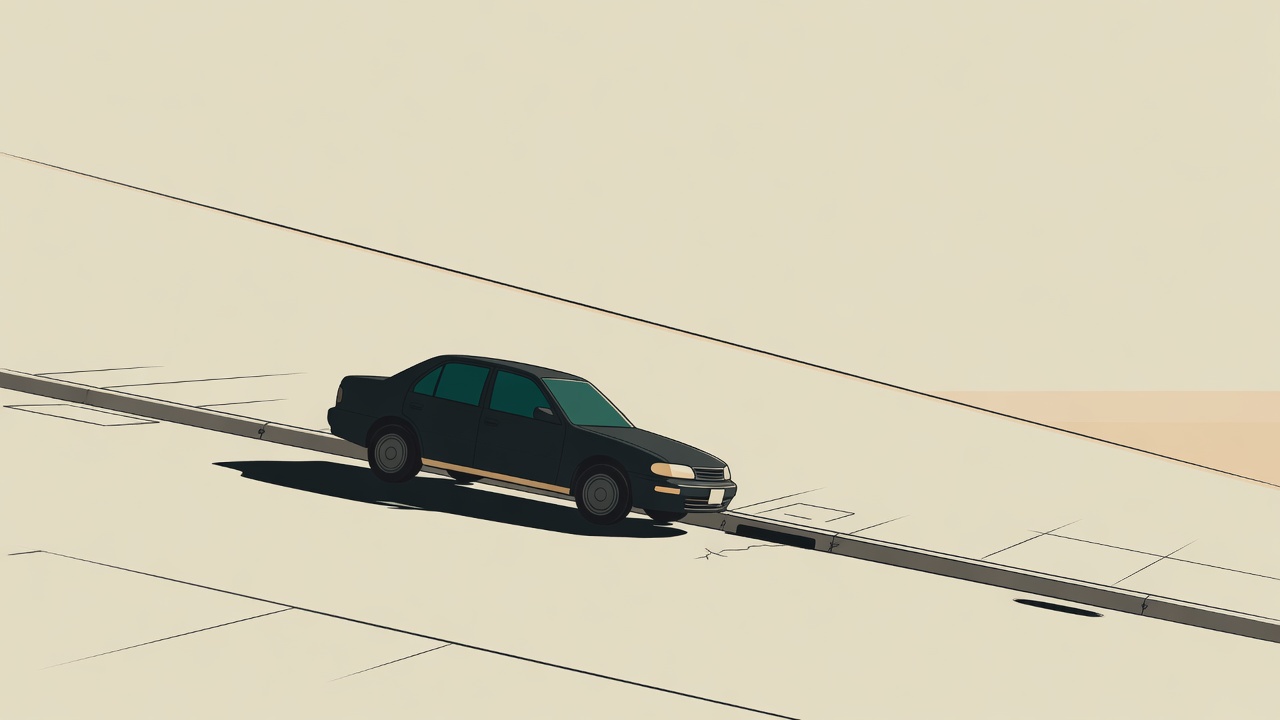
- Parking on a Grade — park uphill and downhill, with a curb and without one.
- Stop Quickly — stop fast and safely when the examiner tells you to.
- Backing — back up 50 feet slowly while you look behind you. The rear-view mirror and a backup camera are off limits.
- Obey Stop Signs — stop fully before the stop line or crosswalk. Stay stopped until it is safe to go.
- Obey Traffic Signals — come up to the light slowly enough to stop if it changes. On green, wait for the intersection to clear.
- Signal and Turn — signal for the last 100 feet before you turn. Hand signals and the car’s signals both count.
- Passing — look ahead and behind before you pass.
- Stay in Proper Lane — stay in the right lane unless the street is one-way. Change lanes only when it is safe.
- Follow at a Safe Distance — stay at least four seconds behind the car ahead.
- Use Proper Posture — keep both hands on the wheel and your elbow off the window.
Both lists are on that same FLHSMV page. Afterward the examiner explains any mistakes. If you fail, you are asked to study or practice before you come back.
A skills retest is $20.00 on the FLHSMV fee list.
Practice the written test here
Free practice is real practice. Answers show where they come from. The test-like mode stays quiet on a right answer and explains every miss.